Thursday, August 30, 2018

The Gene Pool

dna 1If you're a woman, you've probably heard all about the BRCA gene or at least heard enough to make you feel more than a little anxious.  Together, let's figure out what it is and what it isn't.

BRCA; it stands for BReast CAncer susceptibility gene.  There are two BRCA genes; BRCA 1 and BRCA 2.  Every woman has the BRCA genes but not every woman has mutations in these genes.  It's the mutation that makes you more susceptible to breast cancer AND ovarian cancer than those women who do not have the mutations.  Even still, having the BRCA mutations doesn't mean that you certainly will get breast or ovarian cancer.   Inherited mutations only play a role in breast or ovarian cancer 5% of the time.  There are so many other factors that contribute to the growth of cancer.  (

Here's how it works.  The BRCA gene has a job to suppress breast cancer.  If you were born with a mutation in one of the genes, it means that your risks may increase, not that you will surely get cancer because you still have one good gene that compensates, and in a sense, puts the brakes on cancer growth.  There are environmental factors that can affect these genes.  If, for example, carcinogens damage the second gene, then your risks will increase again. Having the gene mutations alone does not cause cancer.  Remember that!

These facts are important to understand before you choose testing.  Many women do the BRCA testing and panic when they see a positive result.  This can lead some, to unnecessary surgeries and psychological distress.  Test results like this will change your world but do you know what else will change your world...Focusing on what you can do! 

There are far more environmental factors and the way we care for our own bodies that have a more lasting, negative effect on our cancer health than gene mutations do. Don't lose focus of that.  Be proactive in your health whether you have the gene mutations or not.  Start with getting your nutrition to a healthier state.  Find better ways to manage your stress and make sure you are getting a decent amount of sleep.  Getting healthy and nourished will have lasting health benefits.

To learn more you can visit:
https://www.cancer.gov/about-cancer/causes-prevention/genetics/brca-fact-sheet#q3
http://www.councilforresponsiblegenetics.org/ViewPage.aspx?pageId=180

So, how do you move forward?

1.  Understand about the BRCA gene
2.  Know your risks and share your family history with your healthcare provider.
3.  Test your genes if there is a strong cancer line in your family, and after you have discussed this            with your doctor.
4.  Seek genetic counseling if needed.

Above all else, don't panic if you do happen to have the mutation.  Education, prudent screenings and healthy living will help ensure you live a long happy and healthy life.

Sunday, July 29, 2018

Why live with urge incontinence?


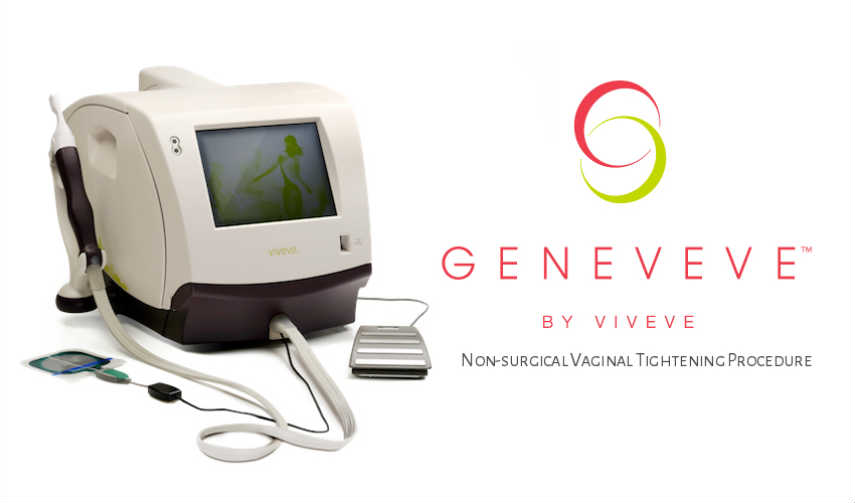
Image result for geneveve treatment

It's not something we talk about every day but maybe we should...

Urinary incontinence.  You aren't alone if this is a struggle for you.  If anything, you are part of a large majority of women who suffer with this embarrassing problem.  It's not easy to even know how to talk to your doctor about the subject but now, we've made it easy to start the dialogue with your healthcare provider at Madison Women's Clinic.  Simply make an appointment and say to your provider, "Tell me about Geneveve."  It's that easy!

Geneveve is the newest addition at Madison Women's Clinic, serving women with urinary incontinence as well as urge incontinence.  What is urge incontinence you ask?

Urge incontinence is the second most common form of incontinence, accounting for roughly 3 out of 10 cases.  It often starts prior to menopause, even as early as the 30's.   It feels like a sudden and strong urge to urinate.  Some women experience leaking of urine if the bladder contracts when it shouldn't.   This condition is called by other names you may have heard before: Overactive Bladder, Bladder Spasms, Spasmodic bladder and Irritable bladder.  Sound familiar?

Here's the deal; you don't have to live with this.  A Geneveve treatment makes it so easy to bring comfort and confidence back into your life!  It takes just 30 minutes out of your life, requires no sedation, no cutting, no needles.  It's a simple non-surgical, radio-frequency technology that stimulates collagen growth in the vagina.  By promoting the collagen protein, the vaginal walls tighten which in turn, creates greater bladder control.

 Do you even remember what it felt like to not have a sudden urge to urinate at the most inopportune times?

Wednesday, July 25, 2018

Meet Geneveve!


Related image

We would like to introduce you to the newest member of Madison Women's Clinic- Geneveve!  We are so excited to have her on board.

Now, you might be wondering what her credentials are...Well, she specializes in Incontinence!  Those moments when you are afraid to laugh, cough, exercise and let's not forget the dreaded sneeze!! Ah, those uncomfortable moments can be something you look back at and nervously laugh about, now that Geneveve is here!

Geneveve is the latest in gynecological technology.  It is a non- surgical, rejuvenation treatment that uses radio frequency to help stimulate the production of collagen in the vagina.  Collagen is a powerhouse protein in our cells that give structure and elasticity to the tissues in the body and the skin.  By providing more collagen production directly to the vagina, the result is a tighter, vaginal wall that greatly reduces the symptoms urinary incontinence.

You'll appreciate Geneveve for most of the same reasons WE love Geneveve.

  • It's a non surgical procedure which means it's comfortable
  • No needles
  • No cutting
  • Typically completed in only 1 treatment
  • The procedure takes about 30 min. so you get back to your life in no time. 
  • Helps restore confidence
It's so easy to get started with your life changing Geneveve treatment!  Just give us a quick call and schedule an appointment in either our Rexburg, or Rigby Office.   Just because 68% of women between the ages of 42 and 64 live with incontinence, doesn't mean you have to as well!! Don't wonder what you're missing...

Wednesday, June 27, 2018

So you want to get married?


bride, dress, hands

You've planned for this day for months...maybe even years if you count the time spent day dreaming about it.   It's important you spend a little time at your favorite gynecologists prior to the big day.

I know...not what you had in mind right?

Still, here's what you can expect at your first premarital exam. We promise it will be a good experience. 

1.  Meet with one of our providers.  We have a variety of providers with varying strengths and personality types, all who are great to listen and ease your anxiety.  They are willing to work with you, past health issues, current health concerns and how to prepare for the next phase of life.  You can choose to meet with one of our OB/GYN docs, or our Nurse Practitioner who is amazing and a wonderful choice for young women who have not been sexually active.

2.  The premarital exam.  The worst part of a premarital exam is the anxiety and worry leading up to it.  The internal exam is important in order to make sure you are in good physical health and identify any problems that could cause painful intercourse.  The premarital exam is also a good time to go over any other health concerns you may have regarding your general health or gynecological issues.  Your doctor will also make sure you are up to date on immunizations. 

3.  Birth control.  This is a good time to educate yourself on the options in birth control and discuss any worries or concerns you may have. 

4.  Pregnancy.  Not only can you discuss birth control but talk about how to prepare now, for the day when you want to conceive.  Your provider can give you great information on diet and nutrition, high risk issues and how to be your best healthy self,  prior to getting pregnant.

5.  Q and A.  The premarital exam is also the best time to confide and ask questions that may have been going unanswered because of the sensitivity of some topics.  This is a great time to establish a relationship with a provider and build trust with him or her. 

Preparing your body and mind for marriage is just as important as choosing the dress.  The wedding day lasts  for just hours but a marriage lasts a lifetime.  It's important you are prepared and ready to embark on an exciting and new life together.  Madison Women's Clinic is here for you every step of the way. 

Friday, June 22, 2018

The Baby Business


 adorable, baby, baby feet

The business of having a baby is big! 

Most women conceive, incubate and deliver a healthy baby with few, if any, bumps in the road.  For less than 10% of pregnant women, it's not quite as routine.  For many reasons, they can be considered high risk.


What puts a woman in a high risk category for pregnancy?


  • Age-  The younger or older you are, the greater your risk for complications such as early miscarriage or genetic defects, for women over 40.  Having good prenatal care can do a lot to keep the mother safe and often complications can be managed you are followed closely. 
  • Pre- existing health conditions- Being pregnant puts a huge strain on your body.  If you already deal with health issues such as diabetes, autoimmune disease, depression, anxiety, kidney, heart or lung issues, you will want to involve your doctor long before you decide to get pregnant.  Any family history with miscarriage, early delivery or any other complications can put you at risk too. 
  • Medical conditions brought on as a result of pregnancy-  You can be totally healthy and sometimes, it's still not enough.  Gestational diabetes, Pre-eclampsia are two conditions that can develop while you are pregnant.  Again, good prenatal care is vitally important so that if an issue were to arise, it could be managed sooner than later. 
  • Multiple births- Of course, twins, triplets or more creates a special circumstance that requires more vigilance and care.  Today, most women are able to carry multiple babies with very good success but you still need to be educated and careful to ensure they aren't delivered too early. 
  • Fetal problems- Sometimes, the health risk to mother may be affected by the health of the baby.  Through ultrasounds, fetal problems can be detected.  Again, early diagnosis and intervention are what is needed to keep mom and baby as healthy as possible.  
  • Lifestyle-  It goes without saying that things like drinking, smoking, drug use; both recreational and prescription can also put you in a higher risk bracket for complications. 
It's important to remember that many women in high risk categories often go on to deliver happy, healthy babies.  Creating a trusting relationship with your doctor can make it easier to catch these problems earlier, should they crop up.  We live in a time when technology in medicine and especially obstetrics has advanced so far.  There are a series of informative tests and treatments that can be done to ensure the health of both mom and baby.  With all these safety precautions in place, you can allow yourself to relax and enjoy the business of bringing a baby into the world. 

Wednesday, May 30, 2018

Relationship Status

What is your relationship status...

With yourself?

Are you madly, deeply in love?
Are you breaking up?
Is it complicated?


Most of us have a complicated relationship with ourselves.  Odds are, we've fallen out of love.  Life is hard, kids are harder, Summer's here and so is the 20 lbs hiding our bikini body we promised to get 6 weeks ago.  Depends on the day but we can either be falling in love with our strong, confident self or breaking up with girl who keeps falling short.

Self love really is the new relationship goal in life.  All too often, we let ourselves fall short and come in last.  Self love helps us live a more confident, centered life of purpose. So, how can we turn this love train around and start finding a little self-love?

Bad days happen but that doesn't mean we have to set up camp and remain stuck there.  Maybe we visit for a few hours, maybe a day but then it's time to move on.  Part of the problem we face as women is remaining in the past, holding on to hurts like the string of a kite but that will never lift us to higher ground or move us along.  We just stay stuck and tethered to the past.  Let it go.  Letting go of the past that no longer serves us well, is one healthy step toward loving yourself.

Focus on what your basic needs are in life.  Stay mindful in this task and with each decision you make, be sure it is serving these long term needs and values, not wants that will quickly fade.  Oftentimes, we fill up on quick fixes and empty calorie choices that only weigh us down even more.  Overspending, prescription drug abuse, food...can all make us feel good in a moment but it's just a single moment.  There is no staying power in feeding our wants.  Focus on your needs.

Mend the fences along your boundaries.  All too many times, we forget that 'No' is actually a complete sentence.  You can maintain your boundaries without excuses, lies or being rude and ugly about it.  Simply say, "No."  If you are spread thin with one nerve left, allow yourself the opportunity to rest and refuel.  Taking on another project or commitment isn't going to serve you well, nor is it a loving thing to do.  Be gentle and kind, even with yourself.

Tidy up your friends.  Most people come and go in our lives naturally but others may need to be invited to leave.  Either your friends are for you...or they are against you.  Take a closer look at the people you surround yourself with.  Let go of the ones who make you feel 'less than' or 'other'.  Negativity and criticism are love killers, especially when it comes to loving ourselves.  Fill your life with those people who make you feel loved and valuable.

Finally, give yourself the same freedoms and concessions you allow for others.  We are often our worst critic.  We forgive others, compliment others, cheer others along.  When was the last time you did that for yourself?  Give yourself the time of day.  Do something you love to do.  Engage in a new hobby or an old one you shelved.  Even a few minutes a day goes a long ways.  It helps to unwind from the stresses of life.

When we are able to love ourselves more, we are better able to handle life and all the complexities that come with it.  Our relationships will be stronger and more meaningful.  We will be able to handle and recover from stress quicker.  Self love allows for more hope and less anxiety and depression.  Even just changing one negative behavior or habit for a more loving one will begin to make a difference.

It's time to change your relationship status!

Perfectly, perfect


Dart Pin in the Middle of Dartboard

Why be perfect, when you can be average?

Seriously.

Here's why average is way better than perfect.

Perfectionism according to some is a psychological disorder.  Those who suffer with perfectionism may disagree, because that would mean they are less than perfect, but according to research, it sets a person up for depression, anxiety, relationship problems, eating disorders, and in extreme cases, suicide. Any one of these results is a high price to pay just to appear perfect.  Perfect is actually unattainable, no matter who you are or who you think you are.  You are in fact human; flawed and oh so human.

We live in a day when perfectionism resides as close as your back pocket or purse.  Social media runs the average day, all amok with embellished images of blissful lives, immaculate homes, unblemished bodies, adept and accomplished children, impeccable partners and vacations and weekend getaways  beyond compare.  If you are suffering with perfectionism, these images wreak havoc on your mind and heart.  We compare our mediocre to something completely unreal and unattainable and then fill our head with self talk of shame, guilt, doubt and frustration. 

Being a perfectionist is hard work.  One never feels accomplished.  A perfectionist can never feel pride in a job well done because they never see the job they did, as done well enough.  Perfectionists never really take risks.  Anything that can not be done perfectly, won't even be attempted because failure is not an option or acceptable outcome. In fact, the focus for a perfectionist is never really on success, but rather, failure.  They work in extremes, with black and white kinds of thinking.  One may be successful today, but a failure at best, tomorrow.  Sadly, one who struggles with perfectionism never has a consistent source for self worth. 

When one is always consumed with thoughts of perfection, thinking becomes skewed.  They come to demand similar traits in others.  When others fall short, and they will, a perfectionist will often respond with high levels of criticism that can create barriers to good communication and meaningful relationships. 

So, what a person to do?

First, you must recognize in what ways perfectionism creates problems for you, because everyone is different. Perhaps only certain areas of your life are affected.  Pay attention to those areas of your life when you feel the most insecure and ashamed; those moments when you can see for yourself that even your own standards can feel impossible.

Begin setting realistic goals and understand that excellence is a great swap for perfectionism.   Excellence is achievable; it's doing our best time and again and even seeing an improvement in our efforts.  Consider that everything we do is an opportunity to learn and grow. Give those around you, a chance to make mistakes as well.  When we learn to let others fall and fail it becomes easier for us to allow the same from ourselves.

We all need to practice being more authentic and real.  Life is meant to be experienced; the good with the bad, the successes and the failures. When we can begin to put these little changes into practice, the cords of perfectionism that bind us will begin to loosen.  We will find that life can be less stressful and anxious and more pleasant and relaxing.  Try to look at each situation from a new perspective.  By doing this, we can change some of our rigid thinking. 

Average is healthy.  Average leaves room for excellence and growth.  Average is very exciting and creative.  Average isn't afraid to take risks because even failure is an amazing place to learn new things.  Average is patient, loving, kind and connected.  Even if at first, you can't quite let go of the entire lifestyle of perfection, try compromising for one day and let yourself be human.